
Aquamarine vs Blue Topaz: Meaning & Symbolism
Here's the thing. Not all blues are created equal. Walk into any fine jewelry store, and you'll spot two stones stealing the show right away: aquamarine and blue topaz. They both turn heads, they both photograph beautifully, and they both show up in some of the most coveted pieces in our collection here at Miro Jewelers. So when the aquamarine vs. blue topaz question pops up (and trust us, it comes up a lot), we're ready with a straight answer. This guide covers everything you need to know, from color and price to meaning and durability, so you can shop smart and walk away with the blue that was made for you.
Table of contents
Key Takeaways
1. Color Tells the Story Blue topaz delivers crisp, electric blue from a controlled treatment process, while aquamarine offers softer blue-green tones with a natural, watery depth.
2. Both Are Built for Everyday Wear. Each stone scores 7.5–8 on the Mohs scale, though blue topaz has cleavage that makes a protective setting smart for rings.
3. Price Sets Them Apart Blue topaz is budget-friendly thanks to abundant colorless topaz, while fine, deeply saturated aquamarine is rarer and carries a premium.
4. Different Origins, Different Value Aquamarine comes out of the ground already blue, giving it collectible status, while most blue topaz starts colorless and gets its color through treatment.
5. Each Carries Its Own Meaning Aquamarine is March's birthstone, the "sailor's stone" of calm and protection, while blue topaz is December's birthstone, symbolizing joy and friendship.
The Blue Gemstones: Overview
Jewelers have been obsessed with blue gemstones for centuries. From royal crowns to engagement rings, there's just something about that sky-blue color you can't look away from. Among all the blue stones out there today, aquamarine and blue topaz are two of the most beloved and widely worn. Both are transparent, brilliant, and genuinely beautiful. Both work for everyday wear, and both can totally hold their own on special occasions.
What sets them apart? Where they come from, how they form, and the vibe each one brings to a piece. We carry both in our collection, and understanding the differences between them will help you find the one that truly speaks to you.
Blue Topaz: The Ice-Cold Showstopper
Blue topaz is bold, brilliant, and impossible to ignore. Here's a fun fact: pure topaz is actually colorless in nature. Those vivid blues you see in jewelry? They come from a tried-and-true treatment process using heat and radiation. It's a common practice in the industry that gives us three popular colors customers love:
Sky Blue Topaz: A light blue that reminds you of a clear afternoon sky.
Swiss Blue Topaz: A medium, saturated blue with electric vibrancy.
London Blue Topaz: A rich, dramatic, dark blue-gray color.
With a Mohs hardness of 8, blue topaz is tough enough for rings, bracelets, and anything else you'll wear a lot. It's widely available, affordably priced, and seriously brilliant. If you want a stone that turns heads without breaking the bank, blue topaz is hard to beat.
At Miro Jewelers, we've put together a beautiful lineup of blue topaz pieces, everything from elegant pendants to bold cocktail rings, all built to last.
Aquamarine: The Ocean's Daydream
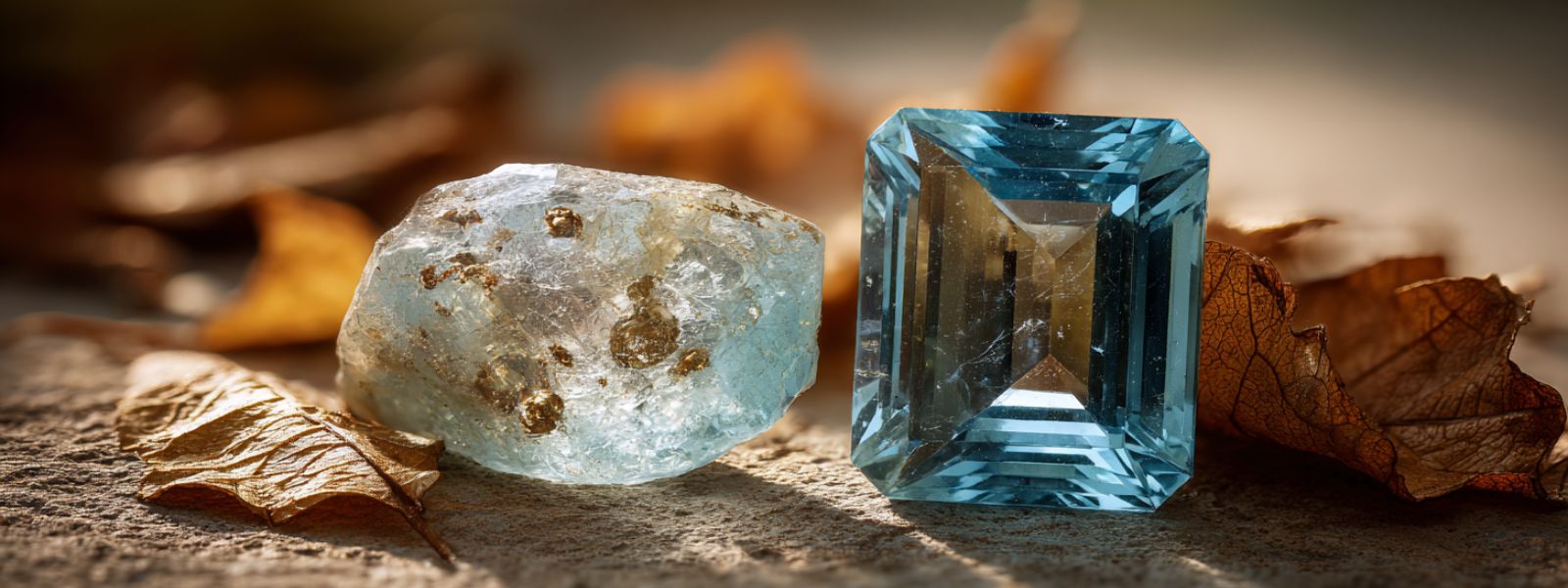
Aquamarine is basically poetry you can wear. Its name comes from the Latin for "water" and "sea," and one look tells you why. It has that cool, see-through beauty of the Caribbean at sunrise. Its color ranges from the palest icy blue to a deeper, more saturated blue-green that feels like still, deep water.
Aquamarine belongs to the beryl family, right alongside emerald and morganite. It forms naturally in pegmatite rocks and is mined mostly in Brazil, though deposits also turn up in Pakistan, Zambia, and Madagascar. Since aquamarine shows up in this gorgeous range of blues all on its own, people love it for its natural, untreated beauty. Some stones get a little heat treatment to take out the greenish tones and bring out the pure blue, but that's totally accepted in the industry and doesn't hurt the value.
On the Mohs scale, aquamarine scores between 7.5 and 8, putting it in the same durable tier as blue topaz. It's the official birthstone for March, and it carries centuries of romantic history and symbolism. We love this stone for the quiet elegance it brings to every piece we set it in.
Blue Topaz vs. Aquamarine: 5 Key Differences
When you stack blue topaz against aquamarine, five things really set them apart. Let's break them down.

1. Color and Shade
Color is the first thing you'll notice, and these two stones head in very different directions.
Blue topaz offers a range of intensities from light sky blue to deep London blue, but the color tends to look crisp, saturated, and almost electric. It's the kind of blue that pops in any light and grabs your attention right away. The hues stay consistent and vibrant because they come from a controlled treatment process.
Aquamarine, on the other hand, is softer and more subtle. It's blue often has hints of green or teal that give it a watery, natural depth. The color feels alive, kind of like sunlight rippling through shallow water. Deep, saturated aquamarine fetches the highest prices and ranks among the most sought-after colored gemstones out there.
Honestly, it usually comes down to personality. Do you love bold and brilliant? Blue topaz is calling your name. Do you prefer something soft, layered, and quietly breathtaking? Aquamarine belongs in your collection.
2. Hardness & Durability
Both stones score well on the Mohs hardness scale. Blue topaz registers at 8, and aquamarine falls between 7.5 and 8. That means both can shrug off everyday scratches and handle regular wear with a little care.
Heads up, though. Blue topaz has perfect cleavage in one direction, which means it can chip or split if it gets hit at just the wrong angle. It's not fragile by any means, but a setting with some side protection, like a bezel, is a smart pick for rings.
Aquamarine is slightly softer, but it doesn't have the same cleavage issue, so it holds up reliably in pretty much any style of jewelry. Both clean up nicely with mild soap and warm water. Just make sure to take your jewelry off before workouts or household chores.
3. Price & Value
Price is one of the biggest differences between these two stones, and it's worth getting clear on.
Blue topaz is one of the best-priced fine gemstones out there. Since it's treated from naturally colorless topaz (which there's plenty of) and the treatment process is well-established, blue topaz gives you stunning color and sparkle at a price that works for most budgets. That makes it a great pick for big statement pieces or gifts that don't stretch your wallet.
Aquamarine sits in a higher price range, especially when you're looking at stones with deep color and great clarity. Fine aquamarine is rarer than blue topaz, and its natural origins add to its value. Smaller, lighter aquamarines are more affordable, but top-quality stones can definitely come with a premium price tag. If you're building a fine jewelry collection meant to hold its value over time, aquamarine is a smart investment that pays off.
4. Symbolism & Meaning
Both stones carry rich symbolism, but they tell different stories.
Aquamarine has a long history as "the sailor's stone." People believed it brought safe passage and protection on the water. It's associated with clarity, calmness, and clear communication. For centuries, couples have exchanged it as a symbol of deep trust and lasting love. As March's birthstone, it's an extra-meaningful gift for anyone born that month.
Blue topaz is associated with loyalty, friendship, and open-hearted communication. It has this vibrant, upbeat energy that a lot of people find uplifting. As December's birthstone, blue topaz holds extra meaning for anyone born in the final month of the year. It's a stone that speaks to joy, self-expression, and creative confidence.
If the meaning behind a stone matters to you, think about which story fits the person who'll be wearing it.
5. Origin & Rarity
Naturally blue topaz is pretty rare. Most blue topaz jewelry starts as colorless or pale yellow topaz that's been treated. It's a fully disclosed, totally accepted practice in the gemstone world. The treatments are permanent and don't affect the stone's beauty or wearability.
Aquamarine, on the other hand, comes out of the ground already blue. Brazil has long been the world's top source of aquamarine, with the best stones coming from the Minas Gerais region. Pakistan and Zambia also produce notable stones. That natural blue is a big part of why aquamarine gets premium status.
Aquamarine is the clear winner for collectors who care about where the color comes from. Blue topaz is a great pick if you want tons of sparkle without the big price tag.
Which Is Better for You: Aquamarine or Blue Topaz Jewelry?
Your style, your budget, and what you want the piece to say about you. That's what'll help you pick between aquamarine and blue topaz.
If you're drawn to bold, saturated color with sparkle that holds its own in any room, blue topaz is your stone. It looks stunning with white gold and sterling silver, and with three blue intensities to pick from, you can match it to your wardrobe. If you love bold jewelry at a friendly price, our blue topaz collection at Miro Jewelers has some real showstoppers.
If you lean more toward refined elegance, soft color, and a stone with natural origins and a romantic backstory, aquamarine is the one for you. It looks gorgeous in yellow gold for a vintage feel, or in white gold for a clean, modern look. Mixing aquamarine and blue topaz in one piece is also a stunning move. Layering different blue tones gives you a rich, dimensional look.
Both stones hold up great for everyday wear. But for a fine jewelry investment or a gift with deep symbolism, aquamarine brings an extra layer of meaning that a lot of people treasure.
Blue Topaz vs. Aquamarine: Pros and Cons
Blue Topaz: Vibrant, Playful, and Full of Energy
Pros:
Super affordable, so you get more stone for your money.
Comes in three distinct blue intensities: Sky, Swiss, and London Blue.
Scores an 8 on the Mohs scale, so it shrugs off everyday scratches.
Easy to find in big carat sizes, perfect for bold statement pieces.
That vibrant color plays nicely with just about every metal and skin tone.
Cons:
Naturally blue topaz is really rare, so most stones on the market have been treated.
Because of its perfect cleavage in one direction, it can chip if it's hit at the wrong angle.
Doesn't have the same collectible or investment-grade status as aquamarine.
The bold color is beautiful, but it can feel a little loud for super formal occasions.
Aquamarine: Graceful, Calm, and Charming
Pros:
Natural blue with a depth and complexity that treated stones rarely match.
Loaded with historical and romantic symbolism, perfect for meaningful gifts.
If you're born in March, this is your birthstone, and that connection runs deep.
Top-quality stones hold their value and can even appreciate over time.
Those soft blue-green tones go with pretty much any style or occasion.
Cons:
Higher price tag for the deeply saturated, high-quality stones.
Paler aquamarines can look a little washed out in certain lighting.
Deep blue aquamarine can be tough to find in bigger carat sizes.
Needs careful storage so that harder materials don't scratch the surface.

Final Thoughts
Knowing the difference between aquamarine and blue topaz matters. But after years of working with both, here's the truth: there's no wrong choice. Both are gorgeous, totally wearable, and capable of anchoring a piece you'll reach for again and again.
At Miro Jewelers, we're seriously proud of our aquamarine and blue topaz collections. Every piece is made with care, set in high-quality precious metals, and chosen for its beauty and character. Whether you're after a delicate pendant, a standout cocktail ring, or earrings that stop people in their tracks, we've got both stones in styles and price points to fit your life and your budget.
Come visit us and see these incredible gems in person. There's nothing quite like holding a fine blue stone up to the light and feeling the moment it picks you.
Aquamarine and Blue Topaz - Frequently Asked Questions
Which Is Better, Blue Topaz or Aquamarine?
Neither one is objectively better. The right pick depends on your priorities. Blue topaz offers bolder color and a lower price point, while aquamarine brings natural color origins, richer symbolism, and higher investment value. Our advice? Pick based on the wearer's style, budget, and what the piece is meant to say.
Can Aquamarine and Blue Topaz Be Worn Every Day?
Yep, both work great for everyday wear, as long as you take care of them. They both score between 7.5 and 8 on the Mohs scale, so they hold up just fine in rings, bracelets, and earrings. Just take your jewelry off before anything with impact, harsh chemicals, or extreme temperatures, and store pieces separately so they don't scratch each other.
Are Aquamarine and Blue Topaz Treated?
Yes. Since naturally blue topaz is super rare, most of what you see on the market has been treated with heat and radiation to get that vivid blue. These treatments are standard and permanent across the gemstone industry. Aquamarine sometimes gets a mild heat treatment to take out greenish tones and bring out the pure blue, but plenty of fine aquamarines are left untreated. We're always happy to give you the full story on any stone in our collection.
Is Aquamarine More Expensive Than Blue Topaz?
Yes, aquamarine usually costs more than blue topaz, especially for stones with deep color and high clarity. Because there's so much colorless topaz available to treat, blue topaz ends up more affordable and easier to find. Rich blue, top-quality aquamarine is rarer and costs more per carat. That said, lighter or smaller aquamarines can land in the same price range as blue topaz, so both can fit different budgets.
Is It Okay To Wear Blue Topaz and Aquamarine Together?
Absolutely. Blue topaz and aquamarine look genuinely stunning together. Mixing the bold pop of blue topaz with the soft, layered depth of aquamarine gives you a rich tonal palette that feels sophisticated and on purpose. We've seen this combo work beautifully in layered necklaces, stacked rings, and multi-stone earrings. The contrast in tone actually plays up both stones, letting each one shine in its own way.
Still Have Questions?
Got more questions about blue topaz or aquamarine? Give us a call at +1-303-393-8881 or shoot us an email at info@mirojewelers.com. We'd love to help. Our team at Miro Jewelers is always ready to help.