

How Are Diamonds Made?: Natural and Lab-Grown
Diamonds are often seen as symbols of timeless beauty, but the journey from rough stone to dazzling gem is a fascinating process of time, pressure, and natural wonder. In this blog, we’ll explore how diamonds are made, breaking down the science behind their creation in a way that connects the process to the meaningful moments you’ll experience when choosing the perfect diamond.
Key Takeaways
-
Diamonds are formed under extreme heat and pressure over millions to billions of years, creating unique, natural crystals with distinct colors and hardness.
-
Lab-grown diamonds, made through HPHT or CVD methods, share the same chemical structure and properties as natural diamonds but are produced in weeks rather than millennia.
-
The key differences between lab-grown and mined diamonds lie in their origin, time of formation, environmental impact, and price, allowing consumers to choose based on their values.
-
Whether natural or lab-grown, diamonds from Miro Jewelers are carefully vetted for quality and beauty, offering a personal and meaningful selection for special moments.
Table of contents
What Diamonds Actually Are?
At their core, diamonds are crystals made of a single element: carbon. Deep in the earth, carbon atoms are exposed to extreme heat and pressure and lock together in a tight crystal lattice, which is what gives diamonds their famous hardness and bright, crisp sparkle.
That hardness is a big part of why diamonds have become the go-to for engagement rings and everyday jewelry. They stand up beautifully to daily life while still looking refined and elegant. When you choose a diamond, you’re choosing a material that had already survived extraordinary conditions long before it ever caught your eye in a jewelry case.
Tiny variations in that carbon structure and trace elements create different diamond colors, from classic white to yellow, pink, or blue. That’s why two diamonds that look similar at first can feel completely different once you see them in person. Each one has its own character.

Natural Diamonds: From Deep Earth To Your Hand
The “how are diamonds made in nature?” story is truly epic. Here’s the journey, simplified:
Far beneath the Earth’s surface, in the mantle, carbon is exposed to extremely high temperatures (often over 1,000 degrees Celsius) and intense pressure.
Under those conditions, carbon atoms slowly arrange themselves into a diamond crystal lattice over millions, even billions, of years.
Volcanic eruptions then carry those crystals upward in molten rock, which cools into a volcanic rock called kimberlite.
Over time, mining teams locate these kimberlite pipes and extract rough diamonds, which are eventually cut, polished, and set into jewelry.
So when you look at a natural diamond, you’re looking at something that began forming long before human history as we know it, often 1–3 billion years ago. It’s like wearing a tiny piece of Earth’s timeline that now becomes part of your own story.
What About The Coal Myth?
One of the biggest myths we hear is that diamonds are made from coal. In reality, most natural diamonds form far deeper than coal deposits, from ancient carbon in the mantle rather than from coal seams near the surface. Coal makes for a dramatic movie plot, but the true origin, deep mantle carbon, volcanic activity, and geologic time, is even more extraordinary.

Lab-Grown Diamonds: Same Sparkle, Different Journey
More and more couples now ask, “How are lab-grown diamonds made, and are they real?” Lab-grown diamonds are real diamonds made from carbon, with the same crystal structure, hardness, and sparkle as mined stones. They’re simply grown in a controlled, high-tech environment instead of underground.
There are two main methods:
HPHT (High Pressure, High Temperature)
-
A tiny diamond “seed” is placed into a special press with carbon.
-
The press recreates mantle-like conditions with extremely high heat and pressure.
-
The carbon melts and begins to crystallize around the seed, slowly building a larger diamond crystal.
-
After a few weeks, the rough diamond is removed, then cut, polished, and graded just like a mined diamond.

CVD (Chemical Vapor Deposition)
-
A thin diamond seed is placed in a sealed chamber.
-
The chamber is filled with a carbon-rich gas and heated until the gas turns into a plasma.
-
Carbon atoms from the gas settle onto the seed in fine layers, gradually growing a diamond over several weeks.
-
The resulting rough stone is then cut, polished, and graded using the same standards as natural diamonds.
So when you ask how diamonds are made in a lab, the honest answer is: with the same building block (carbon), the same diamond crystal structure, and a carefully controlled version of what nature does over a much longer time.
Lab-Grown vs. Mined: What Really Changes?
Scientifically, lab-grown and mined diamonds share the same basic chemistry and physical properties; they’re both crystallized carbon, both can be certified, and both are evaluated using the 4Cs of cut, color, clarity, and carat. The key differences come down to:
Source: Natural diamonds form deep in the earth and are recovered through mining, while lab-grown diamonds are created in facilities using HPHT or CVD technology.
Time: Nature takes millions to billions of years; lab-grown diamonds form in a matter of weeks.
Traceability and impact: Lab-grown diamonds typically offer clearer traceability and can come with a smaller environmental footprint than large-scale mining operations, which is important to many modern couples.
In other words, the same material, a different origin story.
Price, Sustainability, and Your Values
For many people, the next question is, “How does this affect what I actually buy?” Lab-grown diamonds usually offer a softer price point than mined diamonds of similar size and quality, which can mean more carat weight or higher clarity and color at the same budget.
Compared to rare natural deposits, the supply of lab-grown diamonds is more predictable due to the use of scalable technology, which keeps prices affordable. Lab-grown products may seem like a good fit for couples who are concerned about traceability, the environment, or just the concept of a high-tech origin.
Natural diamonds, on the other hand, carry that deep-earth, one-of-a-kind origin and long-standing tradition that some people feel emotionally connected to. Neither option is “wrong”. It’s about what resonates with your values, your style, and how you want your ring’s story to feel.
How Miro Jewelers Fit Into The Process?
At Miro Jewelers, we work only with trusted partners for both natural and lab-grown diamonds, focusing on quality, transparency, and visual beauty first. Whether a diamond was formed over billions of years underground or over weeks in a lab, it’s carefully vetted so that when you try it on, it feels worthy of the moments you’re celebrating.
Think of it this way: you’re not just choosing a stone, you’re choosing a story that matches your priorities, your lifestyle, and your idea of “forever.” Our job is to translate all the technical details into something simple: a diamond that makes you smile every time you look down at your hand.
Frequently Asked Questions About Lab-Grown Diamonds
How are Diamonds Made Into Jewelry?
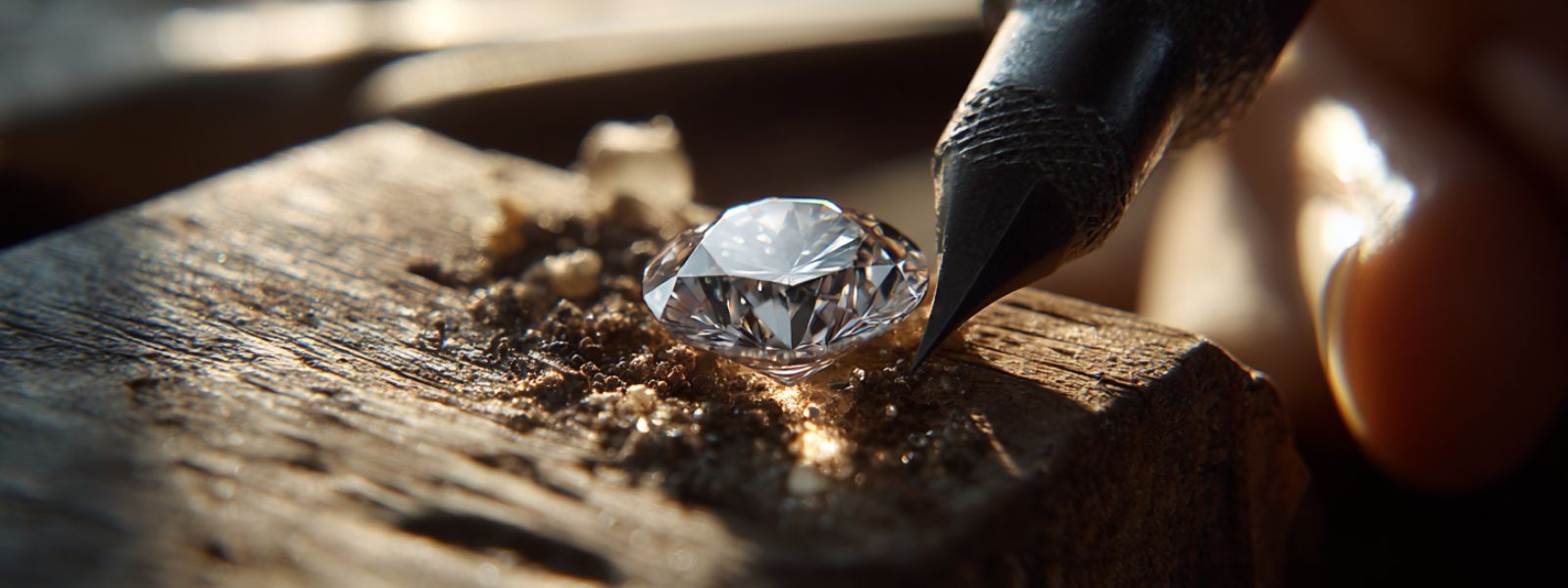
Both mined and lab-grown diamonds are cut and polished by skilled craftspeople, then set into rings, earrings, necklaces, and more. The goal is always the same: maximize light, beauty, and wearability.
Are Lab-Grown Diamonds Real?
Yes. Lab-grown diamonds are real diamonds made from crystallized carbon, with the same hardness and brilliance as natural stones, and they’re graded by gemological labs using the same standards.
Do Lab-Grown Diamonds Last As Long?
They have the same crystal structure and durability as mined diamonds, which makes them just as well-suited for everyday pieces like engagement rings.
How Long Do They Take To Grow?
Most jewelry-quality lab-grown diamonds take a few weeks to form, depending on size and method.
Do Lab-Grown Diamonds Hold Value?
There is a resale market, but like most modern diamonds, they’re best chosen for the meaning and joy they bring you, not as an investment vehicle.
Still Have Questions?
If you’re curious which type of diamond fits your story best, mined, lab-grown, or a mix, we’re here to talk it through with you, answer every question, and help you feel completely at ease with your choice. You can call us at +1-303-393-8881 or email info@mirojewelers.com whenever you’re ready to start that conversation.


