Moissanite Vs Lab Diamond: Which Stone Is Right for Your Ring?
One of the first questions couples ask us is simple: moissanite or lab diamond? You want a stone that sparkles for a lifetime, fits your budget, and feels right in your hand every single day. Both options are beautiful, both are grown in a lab, and both can anchor a ring you'll treasure forever. We're happy to walk you through the decision, which really comes down to what matters most to you. By the time you finish reading, you'll know exactly which stone belongs in your ring.
Explore Our Collections
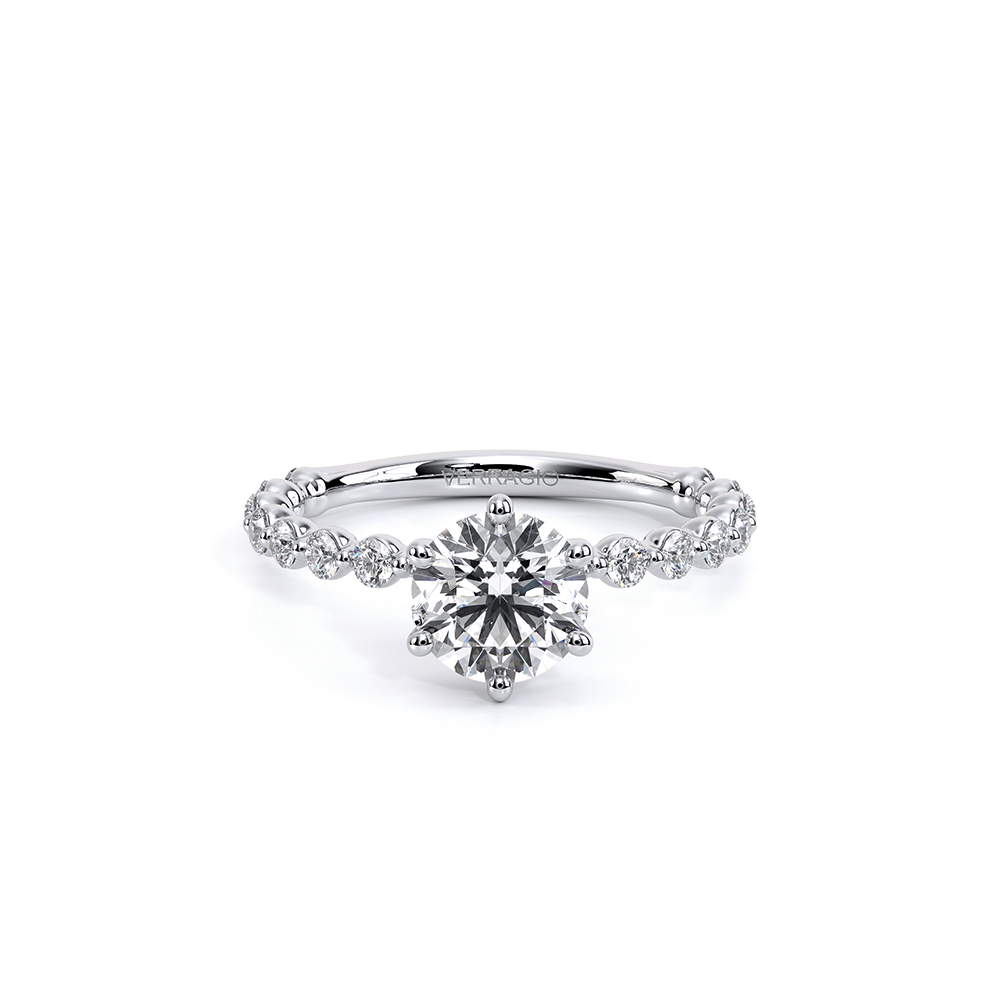
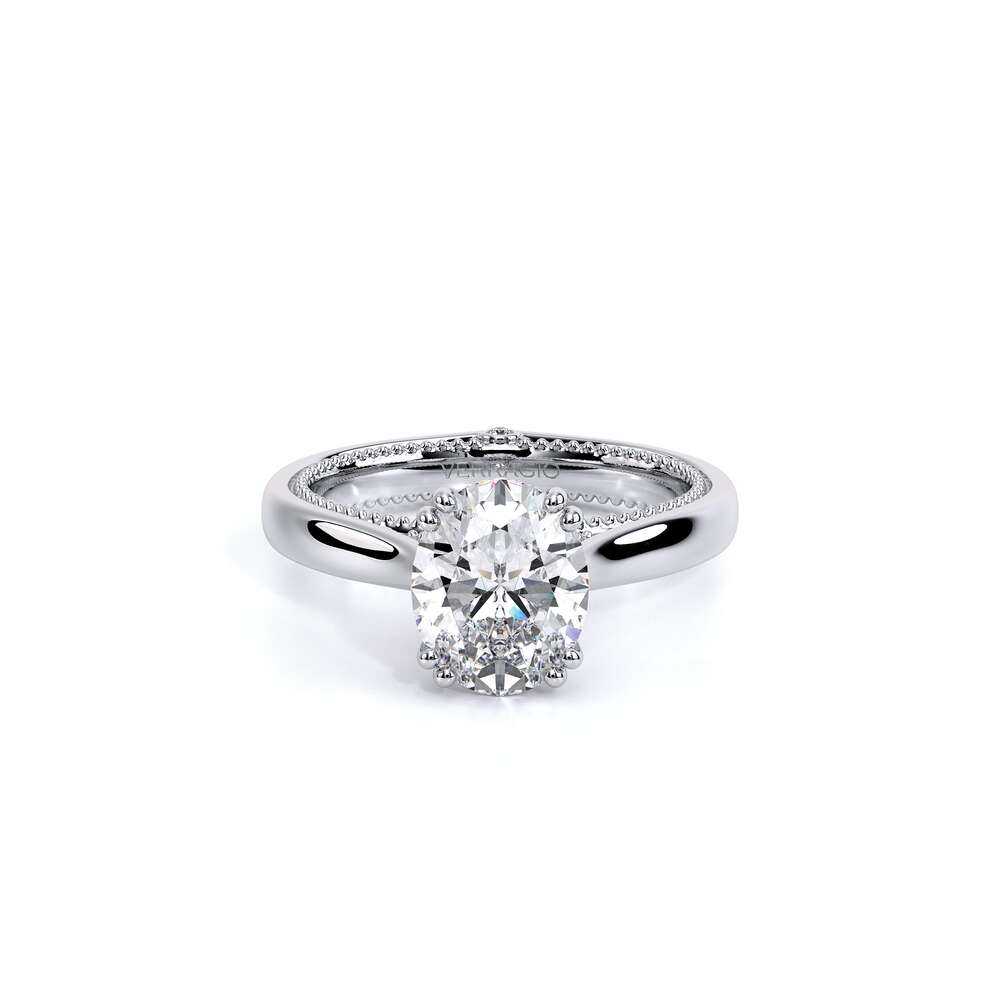
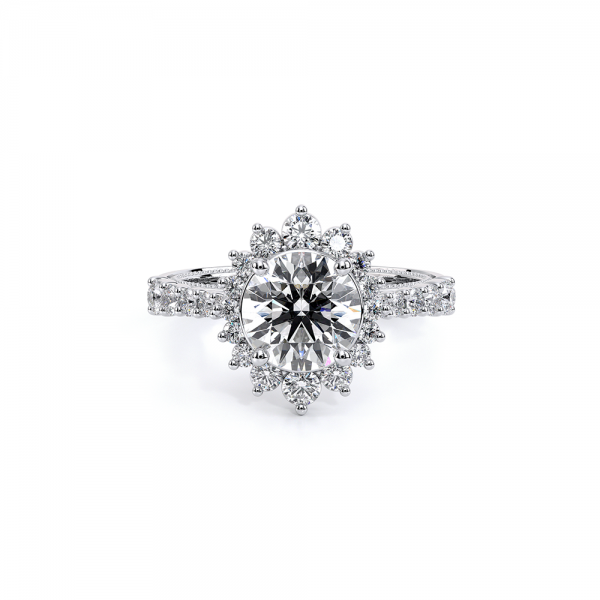
Table of contents
What is a Lab-Grown Diamond vs. a Moissanite Gemstone?
A lab-grown diamond is a real diamond, just grown in a lab instead of pulled from the ground. Skilled technicians recreate the same heat and pressure found deep in the earth, so you get the same carbon crystal structure, the same hardness, and the same grading standards as a mined diamond. Moissanite is a different story. It's made of silicon carbide and was first discovered in a meteor crater, but every moissanite we set today is grown in a lab. So when you stack these two stones up against each other, you're really comparing two different materials that happen to share the same lab-grown origin. That's exactly why so many of our customers find the whole topic confusing at first.
Is Moissanite a Lab-Grown Diamond?
No, moissanite isn't a lab-grown diamond. They're both made in a lab, but moissanite is its own gemstone with its own chemistry. A lab diamond is carbon. Moissanite is silicon carbide. They look alike to your eye, but they're simply not the same material.
Is Moissanite Lab-Created?
Yes, moissanite is lab-created. Natural moissanite is way too rare to use in jewelry, so the moissanite you see in rings today is grown by hand in a lab. That process gives you a consistent, brilliant stone at a friendly price.
Differences Between Moissanite and Lab Diamond
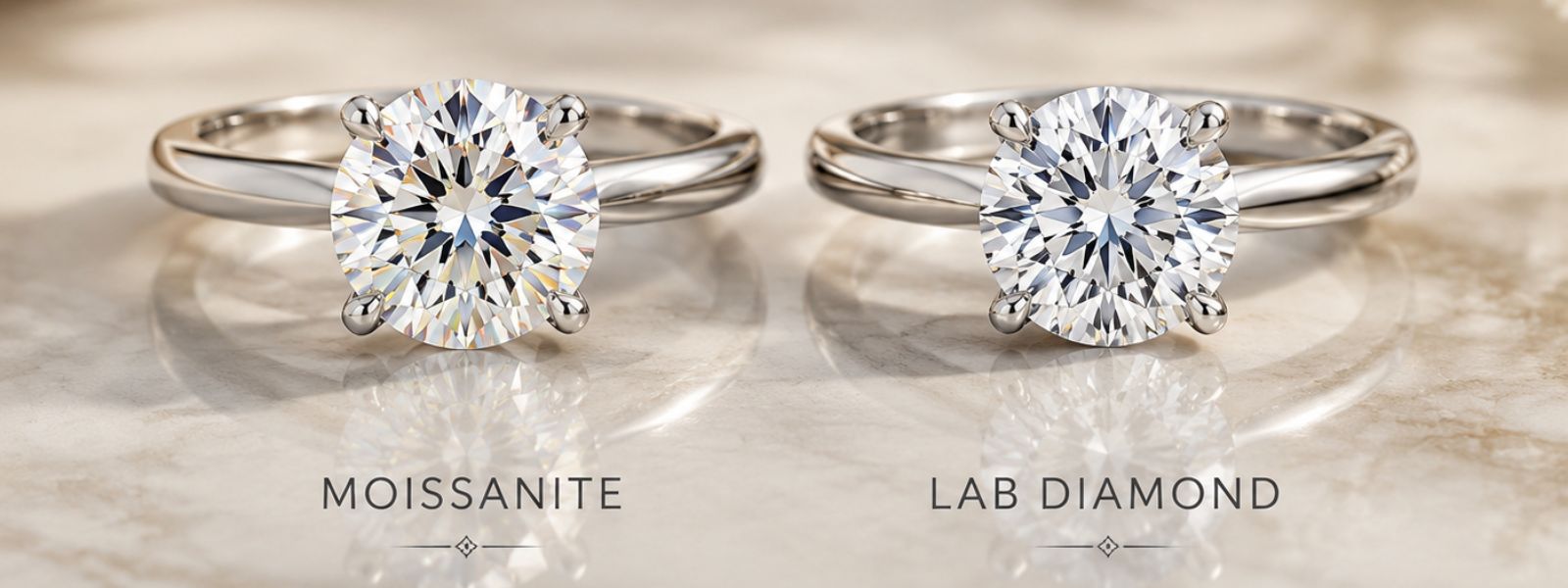
The differences start with what each stone is made of, and they show up in how the stone behaves on your finger. Moissanite scores about a 9.25 on the Mohs hardness scale, which makes it plenty tough for everyday wear. A lab diamond scores a perfect 10. Moissanite throws off more rainbow flashes, often called fire, thanks to the way it bends light. A lab diamond keeps that classic white sparkle brides have loved for generations. Then there's price. Moissanite usually costs less per carat, so your budget stretches further. Resale value and grading differ, too, since lab diamonds are graded by the same authorities that grade mined diamonds.
Moissanite vs Lab Diamond Side by Side
Put these two stones next to each other, and the contrast gets clear fast. A lab diamond is pure carbon, rates a 10 in hardness, and comes with the familiar 4Cs grading you already know. Moissanite is silicon carbide, rated a 9.25, and shines with more colorful fire at a lower price. Both resist scratching, both hold up beautifully to daily life, and both look stunning in any style we make. What it comes down to is this: do you want extra sparkle and savings, or do you want that traditional diamond identity?
How to Tell the Difference Between Moissanite and Lab Diamond
Telling these two apart with your bare eyes is tough, even for jewelry lovers. The biggest giveaway is the fire. Moissanite throws stronger flashes of color, especially in bright light, while a lab diamond holds a cleaner white shine. Under magnification, a trained eye can catch doubling in moissanite, where the facet edges look slightly doubled up. Our jewelers use special testers that read a stone in seconds. So if you ever want yours identified, bring it in, and we'll tell you exactly what you've got.
Moissanite or Lab Diamond: Which Is Better?
Honestly, neither stone wins across the board, so the right answer depends on what you're after. If you want a true diamond with classic appeal and standard grading, go with a lab diamond. If you want maximum sparkle, a bigger look for your money, and a stone that still lasts a lifetime, moissanite is a wonderful pick. We carry certified lab-grown diamonds in every shape and carat weight you can think of, and our designers can build either stone into a custom ring made by hand right here in Denver.

Moissanite vs Lab Diamond - Frequently Asked Questions
Is Moissanite the Same as Lab-Grown Diamonds?
No, they're not the same. A lab diamond is chemically identical to a mined diamond, while moissanite is a separate gemstone made of silicon carbide. The one thing they share is that they're both grown in a lab.
Is Moissanite Cheaper Than a Lab Diamond?
Yes, moissanite is usually cheaper. It often costs less per carat, which lets you size up your center stone or put more of your budget toward the setting.
Is Moissanite a Gemstone?
Yes, moissanite is a gemstone. It's a recognized silicon carbide gem prized for its brilliance, fire, and serious durability, and it makes a striking center stone for any ring we craft.
Can Jewelers Tell the Difference Between Natural Diamonds and Lab-Grown Diamonds?
Yes, a jeweler can tell using professional equipment. Lab-grown diamonds carry tiny growth markers that special machines pick up, and reputable stones come with a certificate noting their origin. To the naked eye, though, the two look exactly alike.
Are Lab-Grown and Natural Diamonds the Same Hardness?
Yes, they're the same. Both score a perfect 10 on the Mohs scale, so a lab diamond is a great choice for a ring you'll wear every single day.
Where Can I Buy a Lab Diamond Engagement Ring?
You can buy one at Miro Jewelers in Denver, Colorado. We carry a stunning selection of certified lab-grown diamonds in shapes like round, oval, cushion, princess, emerald, radiant, and pear. Pick a loose diamond and pair it with the setting and metal you love, or work with our designers on a fully custom piece. Every ring we make is handcrafted in the USA, and each lab-grown diamond comes with proper certification and personal guidance from our team.

Still Have Questions?
Got more questions about moissanite and lab diamond rings? Email us at info@mirojewelers.com or give us a call at +1-303-393-8881, and we'll clear things up. The team at Miro Jewelers is always happy to help.