Cubic Zirconia Vs. Lab-Grown Diamond: Which Is Better?
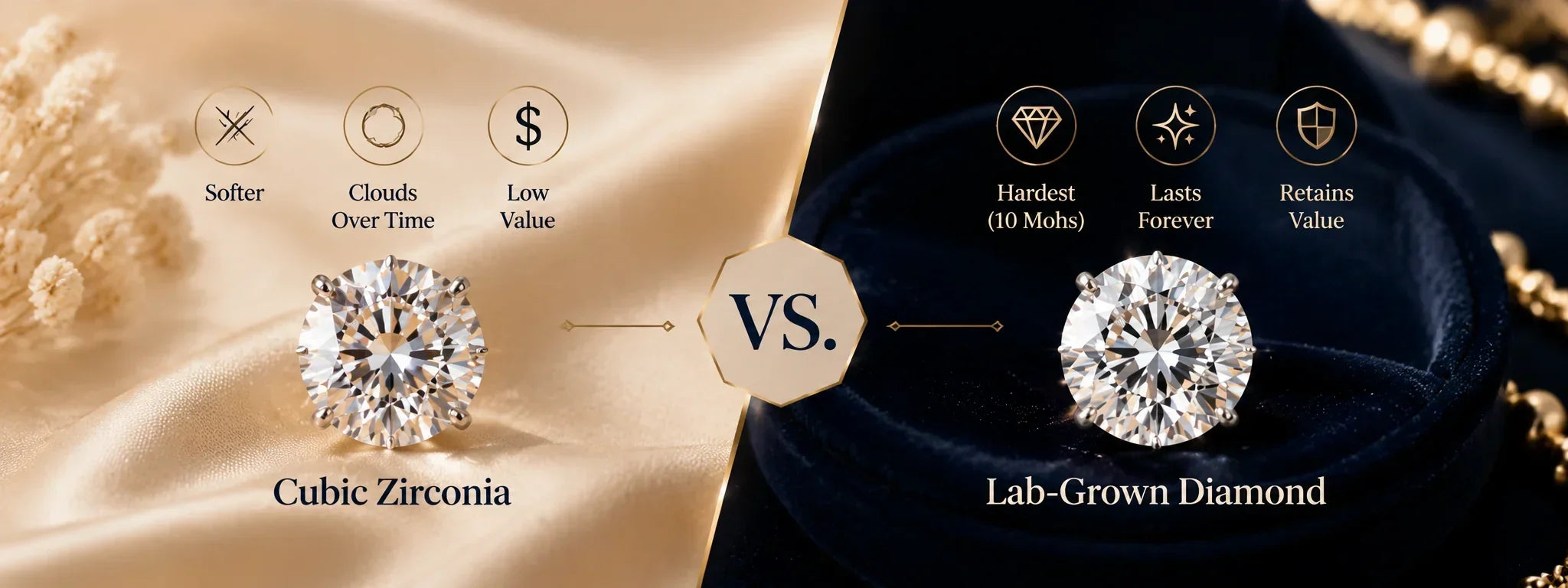
Choosing between Cubic Zirconia Vs. Lab Diamond is one of the first decisions you will face when shopping for a ring meant to last a lifetime. While cubic zirconia is an inexpensive diamond imitation made of zirconium dioxide that is softer, clouds over time, and has little long-term value, a lab-grown diamond is a real diamond made of pure carbon that scores a perfect 10 for hardness and maintains its sparkle forever. They can look similar under the case lights, yet they wear very differently on your hand. To help you shop with confidence, we've broken down every distinction below.
Table of contents
What Is Cubic Zirconia?
A lab-made stone made from zirconium dioxide is called cubic zirconia, or CZ for short. It first appeared in jewelry in the 1970s as an inexpensive way to copy the look of a diamond. CZ is colorless, bright, and very affordable, which makes it a favorite for costume pieces and fast-fashion jewelry. It is not a diamond, though. It contains no carbon, and it is much softer than the real thing.
What Is a Lab-Grown Diamond?
A lab-grown diamond is a genuine diamond. It is grown in a controlled setting using the same building block found in mined diamonds: pure crystallized carbon. High Pressure High Temperature (HPHT) and Chemical Vapor Deposition (CVD) are two tried-and-true techniques that replicate the same conditions that naturally form diamonds, but much more quickly. The end product is a stone that has the same optical, physical, and chemical characteristics as a diamond that has been mined. At Miro Jewelers, every lab-grown diamond we offer arrives with an IGI or GIA grading report, so you always know exactly what you are buying.
Lab Grown Diamonds Vs Cubic Zirconia: The Key Differences

When you place Cubic Zirconia and Lab Grown Diamonds side by side, five factors matter most: composition, hardness, brilliance, price, and certification. The two can be quickly compared as follows.
|
Feature |
Cubic Zirconia |
Lab-Grown Diamond |
|
Composition |
Zirconium dioxide, no carbon |
Pure carbon, a real diamond |
|
Hardness (Mohs) |
8 to 8.5 |
10, the hardest known material |
|
Brilliance |
Flashy rainbow "fire" |
Balanced white sparkle |
|
Everyday durability |
Scratches and clouds within a year or two |
Resists scratches for life |
|
Price |
Very low, a few dollars per carat |
About 30 to 40% less than a mined diamond |
|
Certification |
Little to none |
IGI or GIA graded |
|
Resale value |
Almost none |
Retains meaningful value |
Hardness and Durability
On the Mohs scale, a diamond scores a perfect 10, the hardest natural material on earth. Cubic zirconia sits at 8 to 8.5. That gap sounds small, but it shows up fast in daily life. CZ picks up scratches, and the surface grows cloudy with regular wear. A lab-grown diamond shrugs off knocks and keeps its crisp shine for generations.
Brilliance and Appearance
CZ throws off an intense rainbow flash that jewelers call excess fire. Up close, it can look a little too showy. A lab-grown diamond has a refractive index of 2.42 and returns a balanced mix of white and colored light, the classic diamond sparkle people recognize. Over time, CZ can also pick up a faint yellow or gray tint, while your lab diamond stays bright and true.
Price and Value
This is where CZ wins on the price tag. It can cost only a few dollars per carat, which makes it handy for trend pieces you may not keep for long. A lab-grown diamond costs more, yet it runs about 30 to 40% less than a mined diamond of similar quality. You get a real diamond, real documentation, and a stone that holds value instead of one you replace every couple of years.
Sustainability and Peace of Mind
Both stones are made in a lab, so neither depends on traditional mining. For many of our clients, lab-grown diamonds go a step further by offering conflict-free, traceable origins. That is the heart of the conscious luxury we believe in at Miro Jewelers: pieces that feel beautiful, meaningful, and responsible all at once.
Certification and Documentation
Paperwork is one of the clearest ways the two stones part company. Cubic zirconia is treated as a fashion material, so it almost never comes with independent grading. A lab-grown diamond is different. Ours are certified by IGI or GIA, the same respected labs that grade natural diamonds, and each report details the stone's cut, color, clarity, and carat weight. Many of our diamonds are also laser inscribed with their report number, so your investment is documented and easy to verify for years to come.
Difference Between Cubic Zirconia and Lab Grown Diamond: How to Tell Them Apart

At a quick glance, the two can fool the eye, but a few clues give CZ away. Weight is the biggest tell, since cubic zirconia is roughly 1.7 times heavier than a diamond of the same size. Look closely at the sparkle, too. CZ shows exaggerated rainbow flashes, while a diamond balances bright white light with subtle flashes of color. A lab-grown diamond also passes a standard diamond tester because it conducts heat like carbon, something CZ simply cannot do. When you are not sure what you have, bring your piece to our team, and we will tell you exactly what it is.
Which One Should You Choose?
Reach for cubic zirconia when you want a low-cost, short-term look, such as a fashion piece, a travel stand-in, or a trend you plan to swap out next season. Choose a lab-grown diamond when the piece needs to last: an engagement ring, an anniversary gift, or heirloom earrings you will pass down one day. If you want something you can wear every single day for decades, a real diamond is the smarter long-term buy.
In the end, the Cubic Zirconia Vs. Lab-Grown Diamond choice comes down to purpose and time. Comparing Lab Grown Diamonds Vs Cubic Zirconia is really about how long you want your jewelry to look its best and how much lasting value matters to you.
Shop Lab-Grown Diamonds at Miro Jewelers
As a trusted Denver-area home for conscious luxury, we help you find a lab-grown diamond you will love for life. Browse our engagement rings, diamond earrings, and fine jewelry, or design a one-of-a-kind piece with our custom design team. Choose from popular shapes like round, oval, cushion, princess, emerald, radiant, and pear, in bright white or fancy hues such as yellow and pink. Every diamond arrives with IGI or GIA certification, and our jewelers offer expert guidance, repairs, and personal consultations at our Centennial, Colorado showroom. Book an appointment and let us help you choose with confidence.
Frequently Asked Questions
Are Cubic Zirconia and Lab-Grown Diamonds the Same?
No. While cubic zirconia is a diamond substitute composed of zirconium dioxide, lab-grown diamonds are actual diamonds made of pure carbon. Although the two may initially appear similar, their durability, hardness, sparkle, and long-term value are different.
Is Cubic Zirconia Better Than a Lab-Grown Diamond?
It depends on your goal. Cubic zirconia is cheaper and works fine for short-term fashion pieces. A lab-grown diamond is unquestionably superior in terms of value, longevity, and durability.
How Can You Tell a Lab Diamond From CZ?
Check the weight, the sparkle, and the paperwork. CZ is noticeably heavier for its size, flashes more rainbow color, and rarely comes with a grading report. A lab-grown diamond is lighter, sparkles with balanced brilliance, and carries an IGI or GIA certificate.
Do Lab-Grown Diamonds Eventually Fade or Cloud?
No. A lab-grown diamond keeps its clarity and sparkle for life with basic care. In contrast, after a year or two of consistent use, cubic zirconia often scratches and clouds.
Is a Lab-Grown Diamond a Good Choice for an Engagement Ring?
Yes. A lab-grown diamond is a real diamond, so it offers the durability, brilliance, and everyday wearability you want in a ring you will keep forever. You can choose a larger or higher-quality stone for the same price because it is also substantially less expensive than a diamond that is mined. Our team is happy to walk you through options and help you design a ring that fits your style and your budget.