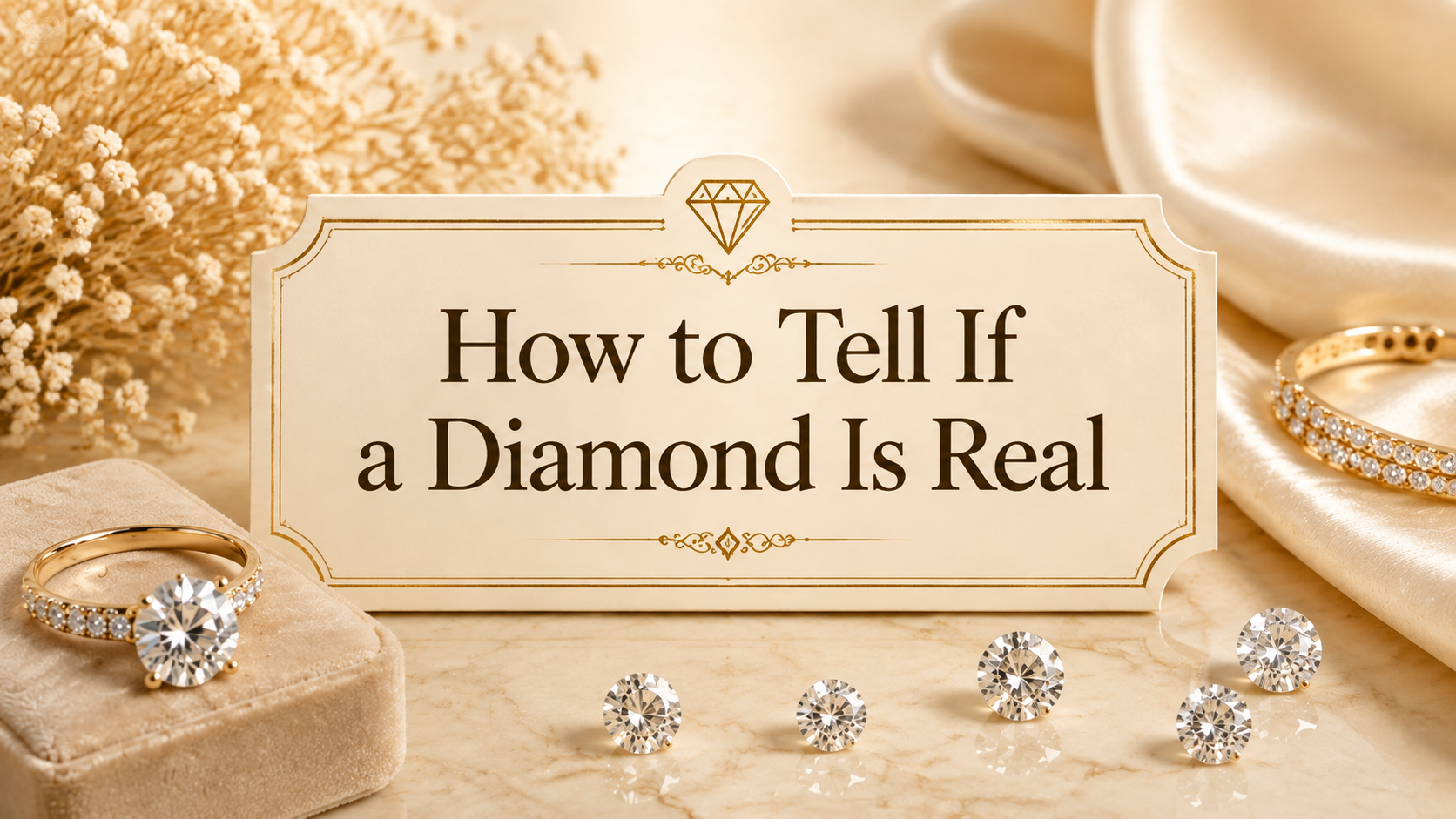
How to Tell If a Diamond Is Real: 8 Easy Tests
Wondering how to tell if a diamond is real? You can check a diamond at home in about a minute. Breathe on it. A real diamond clears the fog in one to two seconds. Shine a flashlight on it and look for a sharp white sparkle with flashes of rainbow fire. Then check the setting for a metal stamp like 14K, 18K, or PT950. These quick tests catch most fakes, but only a jeweler’s diamond tester or a GIA or IGI grading report can tell you for sure.
At Miro Jewelers, our family’s been designing and crafting fine jewelry for more than fifty years. Customers walk in every week with a stone and the same question. So here’s every test that actually works, the two you should skip, and what to do once you’ve got an answer.
Explore Our Collections
Table of contents
How to Tell If a Diamond Is Real at Home: 8 Easy Tests
Most of these need nothing but your eyes, your breath, and a phone flashlight. One tip before you start: run at least three tests before you call it. Every home test has a blind spot, and no single result proves anything on its own.

1. The Fog Test
Hold the stone close to your mouth and breathe on it like you’re fogging a mirror. The fog should clear in a second or two, because diamond pulls heat away fast. On glass or cubic zirconia, the haze hangs around. It takes ten seconds, and it can’t hurt your stone.
2. The Water Test
Drop a loose stone into a glass of water. Real diamonds are dense, so they sink straight to the bottom. If it floats, it’s not a diamond. Just keep in mind that plenty of fakes sink too, cubic zirconia included. Treat sinking as a pass, not as proof.
3. The Flashlight Test
Shine your phone flashlight on the stone in a dim room. A real diamond throws back crisp white light, called brilliance, along with colorful flashes, called fire. Cubic zirconia goes rainbow-crazy in every direction. Moissanite shows even more fire than a diamond, and it can look doubled or blurry when you look straight through the top. The glass just looks flat. You’ll see the same thing in sunlight: a strong white sparkle with quick bursts of color, not a constant rainbow.
4. The Dot Test
Draw a tiny dot on a sheet of white paper. Set the stone flat side down over the dot and look straight through the pointed end. If you can see the dot, or a circular reflection of it, the stone is probably fake. A diamond bends light so sharply that the dot disappears.
5. The UV Light Test
Put the stone under a black light. About a third of real diamonds glow soft blue from natural fluorescence. Here’s the catch: no glow doesn’t mean fake, and some imitations glow too. Use this one to back up your other results, never on its own.
6. The Loupe Test
Look at the stone through a 10x jeweler’s loupe or a strong magnifier. Most real diamonds have tiny natural marks called inclusions, and their facet edges look razor-sharp. A stone that looks flawless with soft, rounded facet edges is usually cubic zirconia or glass. Once you know what you’re looking for, this is the best way to spot a real diamond by eye.
7. The Weight Test
If you’ve got a carat scale, weigh the stone. Cubic zirconia runs about 55 percent heavier than a diamond of the same size. A 6.5 mm round diamond should come in right around one carat. A CZ that measures the same will weigh noticeably more.
8. The Setting Test
Nobody sets a real diamond in cheap metal. Check the inside of the band for stamps like 10K, 14K, 18K, 585, 750, 950, or PT. A “C.Z.” stamp tells you exactly what you’ve got. And no stamp at all? That’s a red flag worth taking seriously.
Two Popular Tests You Should Skip
You’ll see the scratch test and the heat test all over the internet. Don’t do either one. Scratching glass proves almost nothing, since moissanite and sapphire scratch glass too, and you can chip the edge of your own stone doing it. Heating a stone with a lighter and dropping it in cold water can crack it, real or not. A good test should never put your jewelry at risk.
How to Tell a Real Diamond From a Fake: Quick Comparison

So how do you tell real diamonds apart from their most common look-alikes? Here’s what each one does under the tests above.
|
Stone |
Sparkle |
Fog Test |
Diamond Tester |
Density vs. Diamond |
|---|---|---|---|---|
|
Diamond |
White brilliance + rainbow fire |
Clears in 1 to 2 seconds |
Passes |
Baseline |
|
Moissanite |
Extra fire, doubled facets |
Clears quickly |
Often passes (needs dual tester) |
Slightly lighter |
|
Cubic zirconia |
Rainbow-heavy, glassy |
Fog lingers |
Fails |
~55% heavier |
|
White sapphire |
Muted, silvery sparkle |
Fog lingers |
Fails |
Heavier |
|
Glass |
Dull, flat |
Fog lingers |
Fails |
Lighter |
Moissanite is the one imitation that fools basic thermal testers. That’s why jewelers use dual testers that check electrical response, too.
Are Lab-Grown Diamonds Real Diamonds?
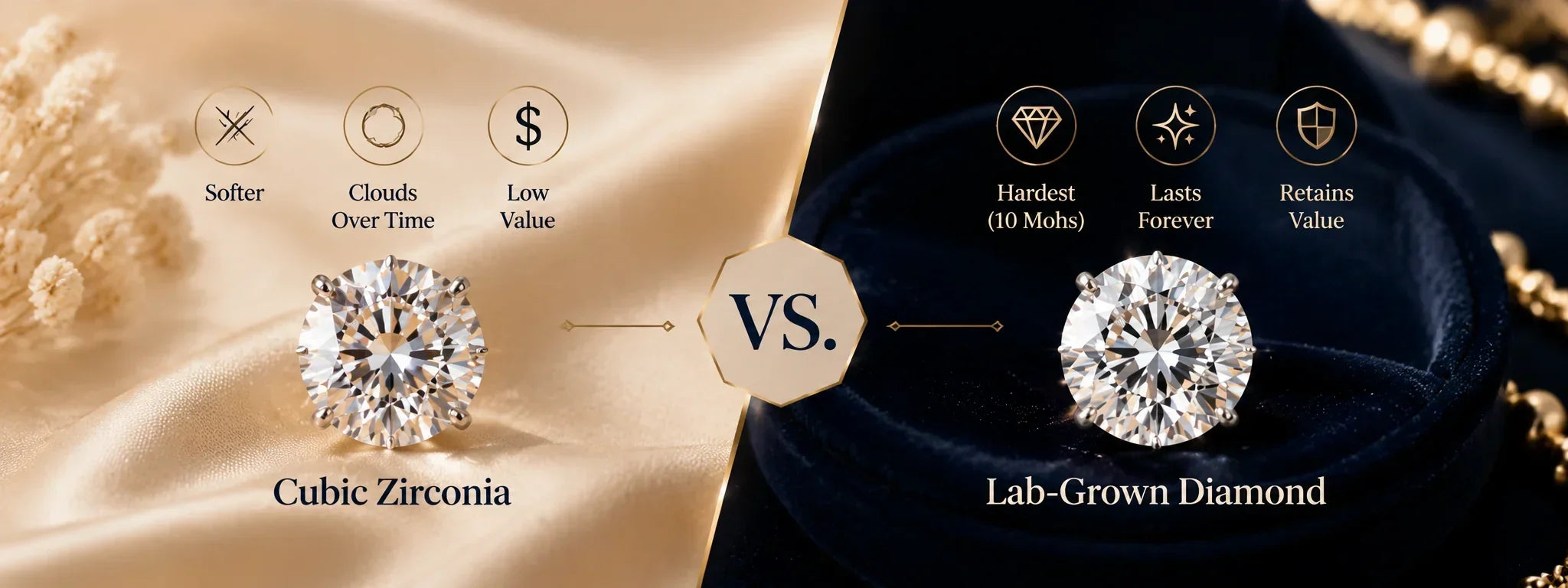
Yes, lab-grown diamonds are real diamonds. Same carbon structure, same hardness, same sparkle as a natural stone. And they’ll pass every test in this guide. The only reliable ways to tell the two apart are advanced lab equipment and the microscopic inscription on the girdle of most certified stones.
We carry both natural diamonds and lab-grown diamonds graded by GIA and IGI, so you can compare them side by side. And if you’re weighing a lab stone against the most popular imitation, our guide to moissanite vs. lab diamonds breaks it down.
When to Get a Professional Opinion
Home tests narrow it down. Certainty comes from an expert. Looking for a diamond tester near you? A jeweler can do three things in minutes that you can’t do at your kitchen table. They’ll run a dual thermal and electrical tester that catches moissanite. They’ll look at the stone under professional magnification. And they’ll check the girdle for a laser inscription, then match that report number against the GIA or IGI database.
If your stone came with no paperwork, an appraisal documents what you own for insurance, and for your own peace of mind, we offer free appraisals along with our repair services, and every piece you buy from us comes with free cleaning and inspection for life. Book an appointment at our Centennial, Colorado store, and we’ll test your stone while you watch.
Frequently Asked Questions
How Do You Know if a Diamond Is Real Without a Tester?
Stack up a few results. Run the fog test, the dot test, and the loupe test, then check the setting stamp. If it passes all four, there’s a good chance it’s genuine. For anything valuable or sentimental, follow up with a jeweler.
What Is the Easiest Way To Tell if a Diamond Is Real?
The fog test wins. No tools, ten seconds. Breathe on the stone and count. Fog that clears in a second or two points to a diamond. Fog that hangs around points to a fake.
Can You Test a Diamond That’s Already Set in a Ring?
Yes. The fog, flashlight, UV, loupe, and setting tests all work on a mounted stone. Skip the water and weight tests, since the metal throws off the results. And if the ring’s an heirloom, let a jeweler handle it so the prongs and the stone stay safe.
Do Lab-Grown Diamonds Pass a Diamond Tester?
Yes. A lab-grown stone is pure crystallized carbon, so it reads on a tester exactly like a natural one. That’s a feature, not a flaw. It confirms you’ve got a true diamond and not an imitation.
Do Fake Diamonds Glow Under UV Light?
Some do. Certain imitations glow under a blacklight, and plenty of real stones don’t glow at all. Fluorescence alone can’t confirm anything either way, so treat UV results as one clue among several.
The Bottom Line
Now you know how to tell if a diamond is real: fog it, light it, dot it, magnify it, and then let a professional confirm what you found. Rather, skip the guesswork? Stop by Miro Jewelers. Our family has served the Denver area for over fifty years, and every loose diamond and engagement ring we sell comes with trusted grading and a lifetime warranty. Bring your stone in, and we’ll give you a straight answer, free.